A leadership transition at Hormel Foods marks more than the end of a long career—it highlights where food safety is heading across the entire protein industry.
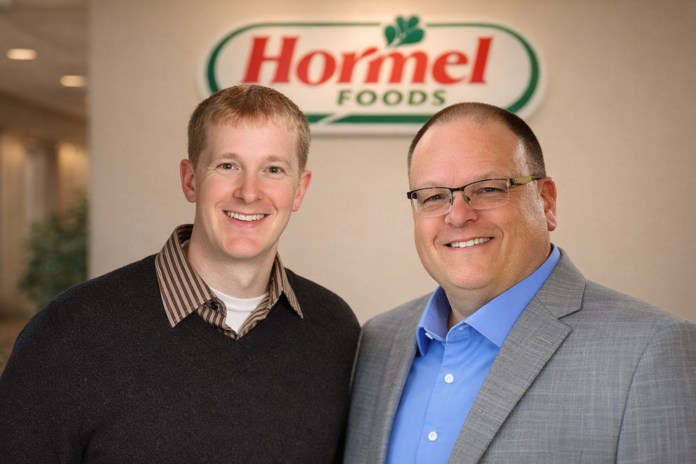
After 35 years with the company, Richard Carlson, Vice President of Global Food Safety & Quality Management, is stepping down. He will be succeeded by longtime internal leader Jeremiah Johnson, signaling a deliberate and strategic succession.
On the surface, it’s a structured transition.
Underneath, it reflects a broader industry evolution:
Food safety is no longer a support function—it is becoming a central driver of operational performance.
From Systems to Strategy
For decades, food safety leadership was built around:
- Compliance
- Protocol development
- Regulatory alignment
That era established the foundation.
But today, expectations have shifted.
Food safety is now directly tied to:
- Brand trust
- Retail and export access
- Production continuity
- Risk management at scale
Carlson’s tenure represents the build-out of robust, reliable systems.
Johnson’s transition represents the next phase:
leveraging those systems as a competitive advantage.
Why This Transition Matters Across Swine and Poultry
Hormel Foods operates across multiple protein categories, making this leadership change relevant well beyond a single segment.
- In poultry, through its turkey operations, food safety is critical in high-speed, value-added processing environments.
- In swine, food safety intersects directly with processing efficiency, export markets, and product consistency.
The common thread:
Processing complexity is increasing—and food safety must scale with it.
The Rise of the Integrated Leader
The appointment of Jeremiah Johnson reflects a clear industry trend:
Food safety leadership is no longer siloed.
Today’s leaders must bridge:
- Plant operations and HACCP systems
- Sanitation and throughput
- Compliance and real-time execution
This signals a shift toward integration over oversight.
Food safety is moving:
- Closer to the production floor
- Closer to decision-making
- Closer to overall business performance
The Bigger Industry Shift
Across both swine and poultry processing, three patterns are emerging:
1. Food Safety Is Embedded in Operations
It is influencing:
- Line design
- Equipment selection
- Workflow and plant layout
- Automation strategies
2. Risk Is More Immediate and Visible
A single issue can impact:
- Brand reputation overnight
- Customer relationships
- Domestic and export market access
Food safety is now a front-line business risk, not a back-end checkpoint.
3. Talent Is Becoming a Strategic Asset
A 35-year career transition highlights a growing challenge:
Who carries forward institutional knowledge while adapting to modern systems?
The next generation of leaders must combine:
- Scientific expertise
- Operational awareness
- Leadership under pressure
- Cross-functional execution
That combination is rare—and increasingly essential.
What This Means for the Industry
For both swine and poultry sectors, this transition reinforces a clear direction:
- Food safety must be embedded into daily operations
- Leadership must understand both science and execution
- Systems must evolve alongside production complexity
Processors that elevate food safety into a core strategic function will be better positioned to:
- Scale efficiently
- Maintain consistency
- Protect brand value
Final Thought
This leadership change is not just about succession—it’s about direction.
The protein industry is moving toward a model where:
Operational excellence and food safety are no longer separate conversations—they are the same conversation.
And as production systems continue to evolve across both swine and poultry,
the companies that integrate those two seamlessly will define the next era of industry leadership.