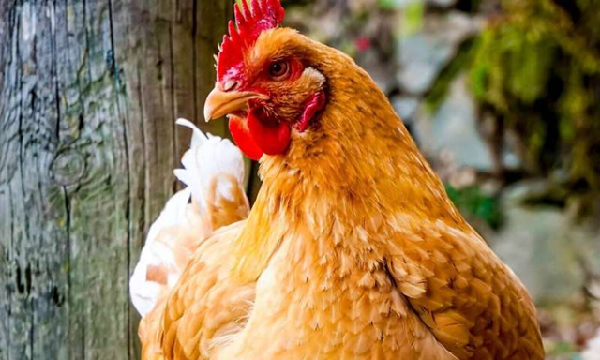
Modern broiler chicken strains have been selectively bred for rapid growth, increased meat yield and feed efficiency, making poultry meat affordable and widely available. But this has led to reduced movement and natural behaviors, such as foraging, and increased susceptibility to conditions linked to inactivity such as poor leg health and skin lesions. These welfare issues can in turn cause significant economic losses in the broiler industry.
The Nottingham study—which emerged through a partnership with agri-tech company Flybox—aimed to understand if activity and behavior could be stimulated without compromising growth performance or gut development, particularly in fast-growing broilers. The paper is published in the journal Applied Animal Behaviour Science.
Gut development is important because it is this which drives the broilers’ growth and health.
The research involved fast and slower-growing broilers, with birds allocated to pens with dead black soldier fly larvae (BSFL) either offered in the trough—the standard method for feeding—or scattered directly onto the litter surface.
The researchers found that scattering BSFL significantly increased total active behaviors in the fast-growing broiler strain by more than 11%, which included running, walking, preening, stretching, dustbathing.
Foraging behavior, meanwhile, increased by almost a third (32%) compared to when BSFL was offered in the trough.
It was found that this increased activity did not negatively affect growth performance or gut development, suggesting that enrichment did not compromise production efficiency.
In the slower-growing broiler strain—which is generally more behaviorally active but less economically efficient—there was no significant difference in total activity or foraging behavior regardless of feeding method.
Producers face increasing pressure from regulators, retailers and consumers to improve welfare standards and natural behavior.
Studies have shown that broiler activity and behavior can be improved by providing a stimulating, enriched environment, but most have not been nutritionally-integrated, so do not contribute to the bird’s dietary intake.
The poultry sector has been exploring sustainable alternative protein sources for feed, including insect-derived ingredients, as part of a broader shift toward circular agriculture.
BSFL are rich in high-quality protein and lipid, making them a valuable feed ingredient, including as a natural feed for birds in the wild. They are also highly palatable and behaviorally engaging for poultry, as well as a sustainable food source.
Nottingham Trent University’s partnership with Flybox has been pivotal to the university’s research into the role of BSFL in sustainable poultry production, with on-campus facilities enabling the rearing of larvae.
“Scattering larvae onto the litter required birds to actively forage to consume them, thereby engaging natural ground-pecking behavior and increased activity,” said Chris Onuoha, doctoral researcher in sustainable poultry production in Nottingham Trent University’s School of Animal, Rural and Environmental Sciences.
He said, “The results demonstrate that even birds selected for rapid growth can be behaviorally stimulated without negative physiological consequences. Increased activity has the potential to improve health and welfare outcomes, particularly in fast-growing birds, with further research needed to confirm long-term health benefits.”
Emily Burton, Professor of Sustainable Food Production at Nottingham Trent University, said, “This work sits at the convergence of welfare science, animal nutrition, sustainability, and commercial practicality.
“By stimulating natural foraging behavior without negatively affecting growth or development, this approach provides a feasible on-farm tool to mitigate some welfare concerns associated with inactivity in intensive production systems.”
Flybox CFO Thomas Stringer said, “Chickens are natural foragers. By supplying insects in a scalable, biosecure way, we enable producers to enhance welfare with minimal disruption.”
Source: Phys.org