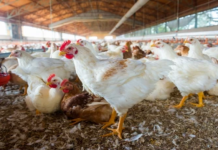
The U.S. Department of Justice has filed a lawsuit against California, claiming the state’s requirement for cage-free egg production conflicts with federal law and places unnecessary burdens on producers nationwide.
At the center of the legal dispute is California’s Proposition 12, a voter-approved measure passed in 2018 that prohibits the sale of eggs, pork, and veal from animals housed in conditions deemed inhumane. The law applies to all such products sold in the state, regardless of where they are produced, effectively forcing out-of-state farmers to comply with California’s standards if they want to sell their goods there.
Federal officials argue this mandate infringes on the Egg Products Inspection Act, a national statute designed to create uniform standards for egg production and inspection. They contend that by enforcing its own restrictions, California is interfering with interstate commerce and contributing to higher food prices by discouraging conventional production methods.
The lawsuit marks another federal effort to weaken or overturn Proposition 12, despite previous court rulings upholding the law. In 2023, the U.S. Supreme Court rejected a challenge by the National Pork Producers Council, though that case was based on different legal grounds than the current egg-focused suit.
Republican lawmakers have pushed for federal legislation that would prevent individual states from imposing agricultural production standards that reach beyond their borders. Those efforts, however, have yet to gain significant traction.
Meanwhile, the Trump administration has highlighted the cost of eggs as part of a broader campaign message focused on tackling inflation. Earlier in the year, prices spiked due to a severe outbreak of avian influenza, prompting Agriculture Secretary Brooke Rollins to launch a $1 billion initiative aimed at preventing future disease spread. Egg prices have since declined, but food inflation remains a persistent issue.
According to the USDA, about 40% of eggs produced in the U.S. now come from cage-free operations, a shift influenced by both state regulations and corporate commitments from major retailers and restaurant chains. Despite federal opposition, California’s standards continue to shape production practices well beyond its borders.