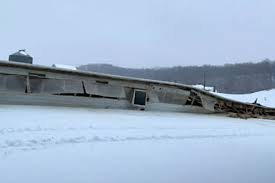
A severe winter storm that swept through Virginia’s Shenandoah Valley over the weekend caused extensive damage to poultry infrastructure, with at least 24 broiler and turkey houses reported collapsed or heavily damaged due to extreme snow and ice accumulation.
The storm delivered an unusual combination of heavy snowfall followed by freezing rain, creating dense ice loads that placed intense pressure on poultry house roofs and structural components. In several cases, producers reported sudden roof failures as the weight of ice and snow exceeded design limits, particularly in older facilities.
According to industry leaders with the Virginia Poultry Federation, damage was widespread across multiple counties, with some operations losing more than one house. Assessment efforts are ongoing as producers work to safely access sites still affected by ice-covered roads and power disruptions.
Animal welfare and producer safety have been immediate priorities following the storm. Crews have been working under challenging conditions to secure sites, manage remaining flocks, and prevent further losses as temperatures fluctuate and melting snow adds additional stress to compromised structures.
While newer poultry houses generally performed better, the storm highlighted vulnerabilities in aging buildings and underscored the growing risks associated with increasingly volatile winter weather patterns. Industry leaders noted that prolonged ice events — rather than snowfall alone — were a key factor in the scale of the damage.
Producers in the region are now beginning the long process of cleanup, insurance evaluation, and reconstruction planning. Extension services and industry partners are expected to play a role in recovery coordination, including guidance on structural upgrades and winter preparedness strategies moving forward.
The Shenandoah Valley remains one of the most important poultry-producing regions in the eastern United States, and industry leaders emphasized resilience and collaboration as producers work through recovery and prepare for future extreme weather events.