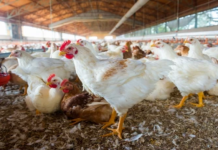
The egg industry is in the middle of a significant shift towards more extensive housing systems like cage-free or free-range. Cage-free eggs, as defined by USDA, must be “laid by hens that are able to roam vertically and horizontally in indoor houses and have access to fresh food and water.” Although this definition seems straightforward, there is a large amount of variability in extensive housing systems due to different management systems, labeling schemes, and welfare certifications. Producers who choose to add additional certifications or labels on their eggs may be certified through various third-party organizations, which may have additional stipulations regarding the amount of space a bird has, the specific enrichments required, or characteristics and conditions of the range for labels that require outdoor access. This brief insight into extensive housing systems illustrates how these certifications can lead to differences in the management of birds across the scope of these systems. Despite the welfare advantages for birds in cage-free housing systems, producers have also discovered welfare disadvantages in these systems. Researchers, producers, and other stakeholders have been working to solve these challenges.
Some common behavior-related welfare issues that have become more apparent with the shift to cage-free housing systems are pecking and aggression. Feather pecking is the pecking, pulling out, and eating of the feathers of other birds. Researchers estimate that feather pecking happens in 80-94% of cage-free flocks in the US. Behaviors like aggressive pecking, vent pecking, and cannibalism are classified separately from feather pecking. Aggressive pecking behaviors are usually related to the process of the birds forming social structures and establishing dominance within those structures. Vent pecking is directed at the hind end of the bird and can lead to more severe issues such as “pick out,” where the internal organs of the bird are removed, or even cannibalism of the birds to each other. These behaviors are a welfare concern as they can lead to issues ranging from feather loss and skin damage, which decrease a bird’s ability to regulate body temperature, to increased mortality.
Pecking and aggressive behaviors are influenced by hormonal, environmental, dietary, and genetic factors. Environmental and dietary factors may be easiest for producers to adjust quickly, especially if detrimental pecking behaviors arise within a flock after placement. While management practices can vary widely across cage-free housing systems, specific strategies that may potentially help decrease these behavioral issues have been researched.
Redirecting pecking at objects in the environment is one strategy. Some enrichments that have been researched in relation to decreasing damaging pecking behaviors include hay bales, pecking blocks, and hanging strings. In both aviary and floor housing systems, different combinations of hay or alfalfa bales and pecking blocks have shown increases in the plumage condition of laying hens or decreased pecking behaviors. Adding hanging strings for birds to peck at has also been found to increase plumage conditions and decrease feather pecking behaviors. Modifying management strategies by decreasing the intensity of lighting both in the house as a whole and removing light altogether from nest boxes can also reduce pecking and aggressive behaviors. For birds that have outdoor access, allowing access earlier in life or for extended time periods may also decrease pecking behaviors.
Adding forages to the diet such as carrots, different types of silages, sunflower cakes, or alfalfa has also been shown to reduce pecking and vent injuries and increase feather quality. However, when considering dietary changes, you should always consult a nutritionist and ensure you are feeding a nutritionally complete ration. Unbalanced diets can be another contributing factor to pecking and aggressive behaviors.
Despite this progress, some research still shows limited impacts of these strategies. This may be due to the many factors contributing to aggressive pecking, variation in management strategies in different housing systems, or differences between research and commercial conditions. Fortunately, this area of research is rapidly expanding as the egg industry continues to implement more cage-free housing. These can still be valuable tools and show great promise for managing behavioral issues during this shift.
Source: Penn State