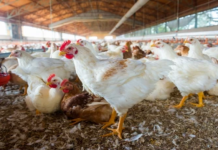
Poland’s poultry industry is facing renewed turmoil as outbreaks of Newcastle disease have emerged just months after the sector began recovering from widespread avian influenza earlier this year. The worsening situation is causing serious disruptions and financial losses for farmers and processors across the country.
At the end of May, two significant outbreaks were confirmed, with one industrial farm in Mazovia province alone accounting for the loss of approximately 1.35 million hens. The Polish veterinary service estimates the combined toll of these two incidents to be around 1.5 million birds. This outbreak has been identified as the most severe in 2025 so far.
Since January, Poland has recorded 30 separate Newcastle disease outbreaks, with total poultry losses reaching 3.5 million birds. These ongoing challenges are putting immense pressure on producers and processors already grappling with the lingering effects of previous disease outbreaks.
Companies like Wipasz, a major poultry processor, have reported substantial setbacks due to the disease. Initial cases in Podlaskie province, where the company operates key facilities, triggered a breakdown in supply chains and forced temporary production halts. The ripple effects are now being felt across the consumer market as well.
One of the most damaging consequences of these outbreaks is the erosion of consumer confidence. As public trust declines, supply chains begin to fracture, making recovery even more difficult for businesses.
Beyond the immediate health crisis, the outbreaks have highlighted a structural challenge within Poland’s poultry industry—overcapacity. In recent years, slaughtering and processing infrastructure has expanded faster than the available supply of broiler chickens. This imbalance becomes particularly problematic when disease outbreaks limit poultry availability, leading to widespread downtimes in production.
These downtimes not only disrupt operations but also strain the financial stability of processors, limiting their ability to invest in growth and modernization. Industry leaders note that competitiveness has been declining for several years, and current conditions are forcing many to shift their focus simply to survival.
Adding to the uncertainty is the potential impact of the proposed Mercosur trade agreement. If ratified, the deal could open the European market to increased imports from South American poultry producers. Polish farmers fear the agreement will intensify competition and further reduce their market share, particularly since Poland currently holds a leading position in EU poultry exports.
There is growing concern that imported poultry may not be subject to the same rigorous production standards required in the EU, a disparity that many in Poland believe could disadvantage domestic producers.
As Poland’s poultry sector faces one of its most challenging periods in recent memory, the focus remains on stabilizing operations, protecting remaining flocks, and advocating for fair trade practices in the European market.